Asbestos work in Aldgate is all we do: our team covers the EC3 postcodes throughout Aldgate East, Whitechapel, Tower Hill and Spitalfields, fully licensed and locally based. We regularly work on properties near Aldgate Pump.
Asbestos in Aldgate buildings
If your Aldgate property was built or refurbished before 2000, it may contain asbestos in artex and textured coatings, asbestos insulating board (AIB), cement roof and wall sheets, pipe lagging, floor tiles and guttering. The Victorian commercial buildings and modern City office towers, with older housing stock towards Whitechapel and Spitalfields common around Aldgate are especially worth checking. On the eastern edge of the City of London, Aldgate blends historic commercial premises with new office and residential developments. Whatever the building, we confirm the material by UKAS-accredited testing before recommending removal, encapsulation or management.
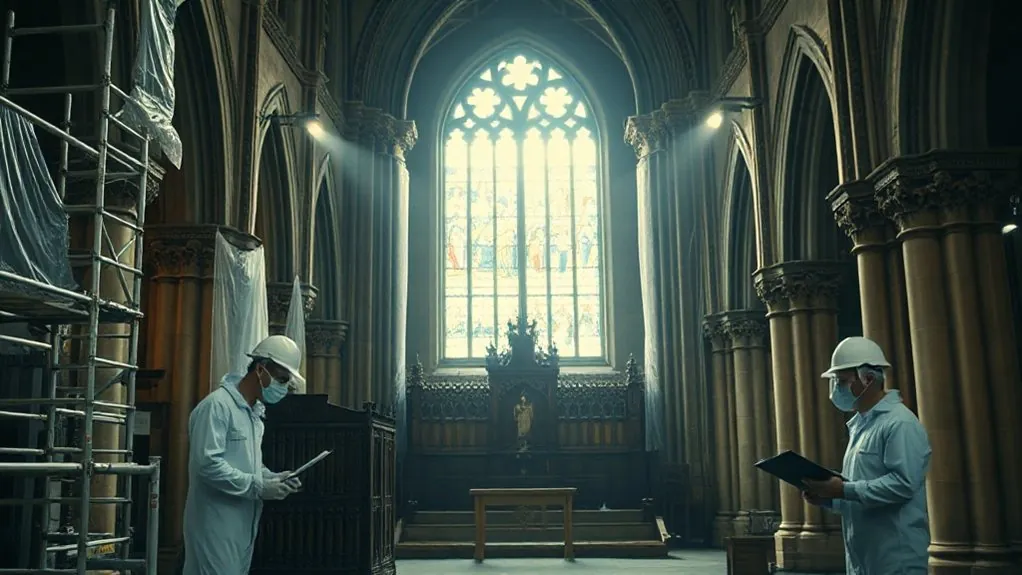
You need licensed, regulation-compliant asbestos removal in your London church or religious building that aligns with CAR 2012, HSG264 and your faculty consent or diocesan approvals. We help you protect worshippers, staff and visitors by providing HSE-licensed removal, UKAS-accredited testing and full documentation, including asbestos registers and management plans. Works are phased around services and community use, with clear zoning and communication, and you can now see how this specialist approach supports your next steps.
Takeaways
- Specialist HSE-licensed asbestos removal for churches, mosques, temples and synagogues across London, planned around worship times to minimise disruption.
- Support with Church of England faculty consent and equivalent faith governance approvals, including technical input for DAC, insurers and conservation officers.
- Compliant asbestos surveys (HSG264), registers and management plans tailored to listed and heritage religious buildings used for worship, schools and community outreach.
- Full liaison documentation: method statements, risk assessments, UKAS-accredited testing, 4-stage clearance and waste consignment notes for diocesan and trustee records.
- ARCA membership, CHAS, ISO 9001/14001/45001 and £10M public liability insurance to satisfy diocesan, trustee and local authority procurement requirements.
Why This Sector Needs Specialist Asbestos Services
Faith schools, churches, mosques, temples and synagogues often occupy older premises where asbestos-containing materials are common in roofs, ceiling coatings, insulation and floor tiles. Trustees, faith leaders and managing committees have a legal duty of care under CAR 2012 to identify and manage these risks, protecting clergy, staff, volunteers, worshippers and community users.
Specialist, HSE-licensed asbestos services are essential to assure compliant surveys, risk assessments and removal, using UKAS-accredited testing where required. Religious buildings frequently host vulnerable groups, large congregations and out-of-hours activities, so safety and clear communication are critical.
Planned, expert-led asbestos works also minimise disruption to services, events and lettings, maintaining continuity of worship and community programmes. A competent contractor can phase works around busy periods, coordinate with other trades and provide the documentation insurers, funders and regulators expect.
The Sector's Compliance Requirements
Religious buildings in London must comply with the Control of Asbestos Regulations 2012 (CAR 2012), treating trustees, dioceses or faith organisations as duty-holders. An asbestos register, management plan and regular re-inspections are essential, particularly where premises are heavily used by the public, children or vulnerable adults. Any intrusive works, refurbishments or demolition require an appropriate asbestos survey in line with HSG264 and, where licensable materials are found, HSE-notified removal by a licensed contractor. Many faith sites also intersect with other regimes: listed or heritage status may trigger conservation body oversight, and buildings used as schools, community centres or healthcare outreach spaces should reflect relevant DfE or NHS expectations in their asbestos management approach. Robust documentation, UKAS-accredited testing and formal 4-stage clearance are critical to demonstrating compliance to insurers, local authorities and regulators.
How We Work Around Your Operations
We appreciate that religious buildings have fixed patterns of worship, education and community use, so we plan asbestos works around your schedule, not ours. We routinely operate overnight, early mornings, weekends and during term breaks or quieter liturgical periods to minimise disruption and safeguard privacy.
Our project manager agrees a phased programme with you in advance, clearly zoning off work areas so services and pastoral activities can continue safely. You receive a full method statement, risk assessments and programme of works before we start, plus daily progress updates.
On completion we provide all clearance documentation, waste consignment notes and, where applicable, the 4‑stage clearance certificate and air test results, ensuring your compliance records are complete and audit‑ready.
Accreditations & Approvals for This Sector
Our work in churches, mosques, temples and other religious buildings is backed by full HSE licensing and UKAS‑accredited asbestos testing, giving you compliant methods and reliable lab results for audits and faculty or diocesan approvals. ARCA membership demonstrates best practice and robust site management, while CHAS accreditation simplifies procurement and contractor vetting. ISO 9001, 14001 and 45001 certifications evidence structured quality, environmental and health & safety management systems – essential where historic fabric, heritage assets and public access are involved. Our £10M public liability cover satisfies most diocesan, trustee and local authority insurance requirements, helping your project pass scrutiny smoothly.
Get a Quote
Speak to our HSE-licensed team about safe asbestos removal in your church, mosque, temple or other religious building. Call 020 4652 3586 or request a site visit today for a fixed-price quote in writing within 24 hours, backed by our pass-first-time clearance guarantee and full GBP 10M public liability cover.
Frequently Asked Questions
Do You Liaise Directly With the Diocesan Advisory Committee About Faculty Consent?
Yes, you’re able to have us liaise directly with the Diocesan Advisory Committee, acting as your diocesan liaison throughout the process. You don’t juggle technical reports alone; we prepare HSE-compliant documentation, then support faculty negotiation by supplying method statements, risk assessments, and programme details tailored to ecclesiastical faculty requirements. You stay in control, but we handle the regulatory dialogue to keep asbestos removal and faculty consent precisely aligned.
Can Asbestos Works Be Coordinated Alongside Planned Re-Ordering or Heritage Restoration Projects?
Yes, you can coordinate asbestos works alongside re-ordering or heritage restoration, and it’s often preferable. You’ll benefit from a unified method statement, shared scaffold integration, and aligned programme dates, minimising disruption and cost. We’ll design phased removal to suit liturgical use, fabric sensitivities, and contractor sequencing, while ensuring full CAR 2012 compliance, HSG264 surveying standards, and clear separation of licensed notifiable works from general conservation activities.
How Do You Protect Historic Organs, Stained Glass and Relics During Asbestos Removal?
You protect them through pre-planned isolation and, where necessary, temporary organ relocation under specialist supervision. You’ll have negative-pressure enclosures, sealed segregation zones, and HEPA-filtered extraction designed to meet CAR 2012. Stained glass and relics are safeguarded by bespoke sheeting, micro-enclosures and artefact encapsulation systems that avoid direct contact. You’ll insist on dust-free decontamination routes, continuous air monitoring, and a phased removal sequence agreed with conservators and the inspecting architect.
Can You Help Prepare the Asbestos Sections of a Faculty or List B Application?
Yes, we can. You’re testing the theory that faculty applicants must “translate” asbestos law for church authorities—and you’re right. We’ll draft the asbestos assessment narrative, set out a CAR 2012‑compliant removal methodology, reference HSG264 and HSE licensing, and align everything with List B or faculty requirements. We’ll also provide method statements, risk assessments, clearance certification wording and programme details so your application reads precise, compliant and easy for the DAC to approve.
What Experience Do You Have Working With Listed Churches, Mosques, Synagogues or Temples?
You’re working with a contractor that’s regularly handled asbestos projects in listed churches, mosques, synagogues and temples across London. You’re supported through heritage approvals, with method statements tailored to protect historic masonry, stained glass and liturgical fixtures. You’ll see works sequenced around services and community outreach needs, all fully compliant with CAR 2012, HSG264 and diocesan or equivalent governance, with UKAS-tested verification and 4-stage clearance on notifiable works.
Areas we cover around Aldgate
We provide asbestos removal, surveys and testing throughout Aldgate and the surrounding EC3 postcodes, including:
- Aldgate East — Aldgate East, E1
- Whitechapel — Whitechapel, E1
- Tower Hill — Tower Hill, EC3
- Spitalfields — Spitalfields, E1
- Minories — Minories, EC3
Aldgate asbestos: local questions
Do you cover Aldgate East and Whitechapel?
Yes — we work throughout Aldgate and the wider EC3 district, including Aldgate East, Whitechapel, Tower Hill and Spitalfields. There's no extra travel charge within the area, and we can usually fit a survey in quickly.
Can you do same-week asbestos surveys in Aldgate?
As a Aldgate-based team we can normally carry out a free on-site survey in EC3 within the same week, then confirm a fixed written price within 24 hours. For urgent or disturbed asbestos, call 020 4652 3586.